
The argument in favor of using filler text goes something like this: If you use any real content in the Consulting Process anytime you reach.




Tracing old packhorse routes across the moors

The moor as a working landscape
Long before turnpike roads and railways, almost every load of salt, lime, wool, lead and millstone that crossed high ground did so on four legs. Packhorse trains — often twenty to thirty ponies in a string, led by a man known as a jagger — picked their way across the moors on routes chosen for good reason: firm ground, gentle gradients, a reliable ford and a bridge wide enough to take loaded panniers.
When better roads and then canals took the trade, those lines were abandoned rather than erased. Many survive as public footpaths, bridleways and parish boundaries. Walking them is a pleasure precisely because they are old and sensible: they link villages to markets, they avoid the worst bogs, and they take the natural pass rather than fighting the hill. Follow one for a day and you are walking the uplands the way the uplands were meant to be walked.
Reading the ground under your boots
The archaeology of these routes is often right at your feet, and once you can recognise it you will start seeing it everywhere.
- Holloways. Sunken lanes worn down by hooves, cart wheels and run-off, sometimes two or three metres deep, with mossy sides, hart's-tongue fern and a canopy of oak and ash. A good section through the bank shows a compacted, stony base — the original road surface.
- Causeys. Stone flag paving laid across soft or boggy ground. The Long Causeway over the southern Pennines is the classic example: a Roman line repaved for packhorses, with slabs and shallow kerbs still in place.
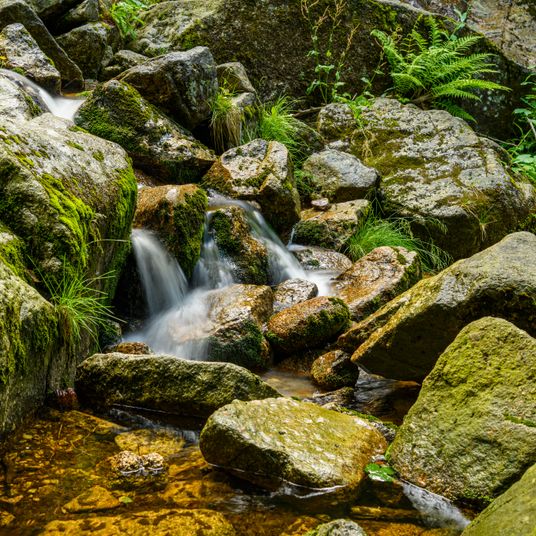
- Packhorse bridges. Usually narrow, humpbacked and either parapetless or with low walls, so a pannier clears the stonework. Approaches are often funnelled and widened, and the deck may be a single stone arch spanning a beck in one span.
- Clapper bridges and fords. Flat slabs on piers, common on Dartmoor and Exmoor, often paired with a paved ford alongside.
Look too for small revetments on the outside of bends, stone culverts, single guide stones, and rectangular walled stance enclosures where a train could rest and be reloaded.
What lives along the old routes
Because these lines were never ploughed or heavily fertilised, they often carry thin ribbons of remnant habitat. Causey edges hold unimproved grassland with bilberry, heather and tormentil. Deep holloways stay humid and cool, sheltering ferns, wood sorrel and a rich layer of mosses and liverworts. Old boundary walls provide basking spots for common lizards and adders, and the stobs and stonework give wheatears and pied wagtails somewhere to perch.
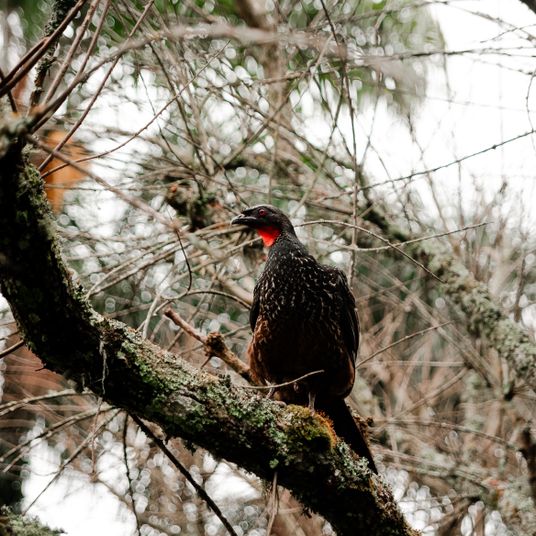
Higher up, the birds are the reward: curlew, golden plover, dunlin, skylark, meadow pipit and red grouse, with merlin hunting the edges and ring ouzel on the steeper cloughs. Watch the becks beneath packhorse bridges for dippers and grey wagtails, and the air above them at dusk for Daubenton's bats. On northern moors, look for bilberry bumblebees on the flowers in early summer, and for green hairstreak butterflies on the scrubby edges of holloways.
Maps and archives: how to trace a route
Start with a current 1:25,000 map and read the names. Causey, Pack, Salt, Jag, Stoop, Gate and Way are all strong hints, and paths labelled as lanes rather than footpaths are worth a second look.
Then go backwards in time. Late nineteenth-century six-inch and twenty-five-inch county series maps show routes that have since been ploughed out or quietly dropped from the definitive map. Tithe maps, enclosure awards and estate plans, held in county record offices, frequently name the route and the bridge that carried it. Quarter sessions records are gold for bridge repair orders, and parish boundary descriptions sometimes follow the old road for miles.
Freely available lidar imagery is excellent for spotting lost causeys and holloways under vegetation, especially in low winter light. A practical approach is to overlay an old map on your phone, walk the line, and note where the ground evidence and the map disagree — the ground usually wins.
Walking well on fragile ground
These routes are historic, but the habitats they cross are not robust. A few habits make a real difference.
- Keep to the causey where it exists; stepping onto the adjacent peat starts the erosion that eventually destroys the path.
- Where a path has braided into several lines, walk the firmest single line rather than spreading the damage.
- Between March and July, assume ground-nesting birds are present. Keep dogs on a short lead near moorland edges and never let them range into heather.
- Avoid walking directly on bare peat hags — they can take decades to recover.
- Leave gates as you find them, take all litter home, and carry out anything you find that could harm livestock.
If you want to give something back, rights of way teams, national park volunteers and local bird groups all welcome help with footpath repair, path surveys and breeding bird counts. Report blocked stiles, broken bridges and eroded sections to the highway authority's rights of way officer.
Where to start
Pick a short length of a known route rather than the whole thing. In the southern Pennines, the Long Causeway above Rochdale gives you paving, packhorse bridges and wide views in a single half-day. The salt ways of the Peak District and the old corpse roads of the Dales and the Lake District fringes are similarly rewarding, as are the track networks around Dartmoor's clapper bridges and the border routes of the Cheviots.
Take a paper map and compass as well as a phone, check the forecast, carry waterproofs whatever the morning looks like, and start early enough to be off the high ground before the weather turns. Above all, walk slowly. These paths were built at the speed of a laden pony, and that is still the best speed at which to read them.

Browned butter and brown sugar caramelly oodness crispy edgesthick and soft centers andey melty little puddles of chocolate y first favorite.Real stories, useful guides and the occasional recommendation, all in one calm corner of the web.
Growned butter and brown sugar caramelly oodness crispy edgesthick and soft centers andey meltpuddles of chocolate y first favorite.Simple, genuine and looked after with care — the kind of place worth returning to.
Bilberries ripen on acidic moorland soils from late summer. Pick only a few from each patch, use a comb gently, and leave plenty for wildlife.
Thomas A. Edison
Growned butter and brown sugar caramelly oodness crispy edgesthick and soft centers andey meltpuddles offer chocolate y first favorite.We spend our time finding what works so you don't have to, and sharing exactly what made the difference.e breathing, we blessed. Surround yourself with angels.

Customer Engagement Marketing New Strategy for the Economy
Moorland edges harbour field mushrooms and hedgehog fungi, but many species are toxic. Always use a good guide and never eat anything you cannot identify confidently.
- Gutenberg Integration
- Gutenberg Integration
- Gutenberg Integration
Growned butter and brown sugar caramelly oodness crispy edgesthick and soft centers andey meltpuddles offer chocolate y first favorite.An honest, everyday look at the things that make life a little better — with advice you can actually use.e breathing, we blessed. Surround yourself with angels.

Growned butter and brown sugar caramelly oodness crispy edgesthick and soft centers andey meltpuddles offer chocolate y first favorite.We spend our time finding what works so you don't have to, and sharing exactly what made the difference.e breathing, we blessed. Surround yourself with angels.

Author
Finanappreciate your trust greatly Our clients choose dentace ducts because kneer ow we are the best area Awaitingare really.

Previous Post


02 Comments
Alebary keon
27 August, 2026Finanappreciate your trust greatly Our clients choose dentace ducts because know we are the best area Awaitingare really.
Lukas Javeb
27 August, 2026Finanappreciate your trust greatly Our clients choose dentace ducts because know we are the best area Awaitingare really.