
The argument in favor of using filler text goes something like this: If you use any real content in the Consulting Process anytime you reach.



Why blanket bogs matter for storing carbon

What makes a blanket bog?
A blanket bog isn't a pond or a marsh — it's a living layer of peat that cloaks hillsides, plateaus and gentle slopes, fed almost entirely by rainfall. You'll find it in the wetter uplands of the UK: the Flow Country of Caithness and Sutherland, the Pennine chain, the North York Moors, parts of Snowdonia, the Lake District fells, Dartmoor and Exmoor. The name says it plainly: the bog blankets the ground rather than sitting in a hollow like a raised or valley bog.
The peat itself is the point. It is made of sphagnum mosses and other plants that never fully rotted away, because waterlogged, acidic, oxygen-poor conditions slow decay to a crawl. Bogs grow upward at roughly a millimetre a year, so a metre of peat may represent ten centuries of accumulation. Some British blanket bogs are several metres deep and began forming after the last ice age.
How peat locks up carbon
Because dead plants pile up faster than they decompose, the carbon they took from the atmosphere stays in the ground. Sphagnum is especially good at this: its cells hold many times their own weight in water, it acidifies its surroundings, and it keeps building new growth on top of old. Layer upon layer, that becomes a vast carbon store.
Across the UK, peat soils are estimated to hold well over three billion tonnes of carbon — more than all the woodland in the country. In some deep peat areas, a single hectare can contain thousands of tonnes, packed into a layer no thicker than two walkers lying side by side. Protecting that store is one of the cheapest forms of climate action available to us.
Why damaged bogs release carbon quickly
The lock only holds while the peat stays wet. Drainage grips cut in the twentieth century, overgrazing, repeated burning, vehicle tracks, erosion gullies and even air pollution all tip the balance. Once peat dries, oxygen gets in and microbes get to work. Carbon that took centuries to store leaves as carbon dioxide in a matter of years.
Eroded peat also washes into streams and reservoirs, staining drinking water brown and forcing extra treatment. Bare, exposed peat faces — the hags and gullies you'll see on some moors — can lose centimetres of depth in a single storm. In short, a damaged bog becomes a source of carbon rather than a store, and the loss accelerates as the surface dries.
Wildlife and plants to look for
The bog is not empty or dull. It is a specialist's world, and part of the pleasure of walking it is noticing how much is adapted to wet feet.
- Sphagnum mosses — many species, from reds to ochres, forming the spongy carpet that makes the peat.
- Common cotton-grass and hares-tail cotton-grass — the white tufts that turn moors into a waving sea in June and July.
- Round-leaved sundew — a tiny insect-eating plant with sticky red hairs, often on bare wet peat.
- Bog asphodel, bog rosemary, cloudberry, crowberry and bilberry — low shrubs and flowers of acid, peaty ground.
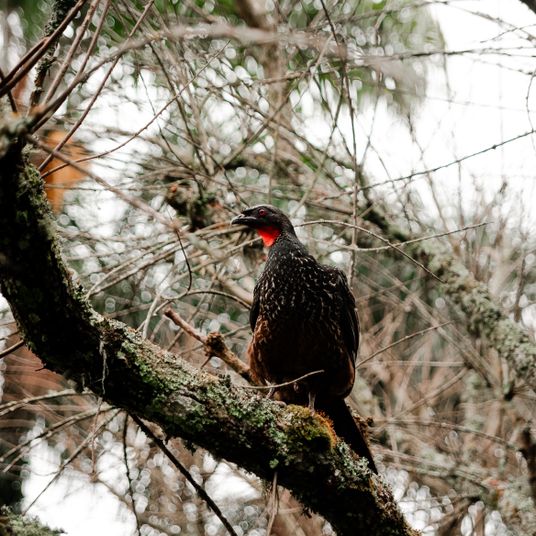
- Breeding waders — curlew, golden plover, dunlin, snipe and lapwing, plus red grouse, merlin, short-eared owl and, in places, hen harrier.
- Invertebrates — the large heath butterfly and emperor moth, both tied to bog plants.
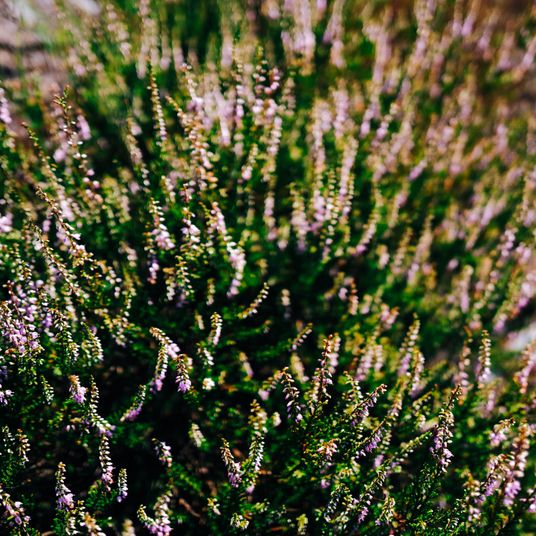
Timing matters. April and May bring displaying curlew and golden plover; June and July the cotton-grass; August the heather. Early morning is best for birds, and for watching mist settle into the gullies.
Walking softly on the moors
Most blanket bog damage from walkers is small and cumulative — a boot print here, a cut corner there, and soon a bare path that widens and erodes. A few habits make a real difference.
- Stay on the path, even when it is wet and the ground beside it looks firmer. The edges are usually the most fragile part.
- Use boardwalks and duckboards properly, and don't step off them onto soft peat to let others pass.
- Wear waterproof boots and gaiters, and carry a map and compass — mist arrives quickly and the ground can be deceptive.
- In the breeding season, broadly March to July, keep dogs on a short lead and avoid lingering near nests or chicks.
- Take everything home, including fruit peel. Never light fires or use disposable barbecues on peat; they can smoulder underground for days.
- Walk in small groups, spread out on popular routes, and take care in gullies where peat is already exposed.
It also helps to report what you see — unusual birds, fresh erosion, a broken boardwalk — to the land manager or your local records centre. Walkers make excellent eyes and ears for the people doing the practical work.
Restoration is already happening
Across the uplands, bogs are being brought back. Drainage grips are blocked with peat dams, plastic puddle barriers or heather bales to raise the water table. Bare peat is re-seeded with nurse grasses and plug-planted with sphagnum. Grazing is reduced where it is too heavy, and burning is stopped on deep peat. On some moors, old tracks are re-routed away from fragile hags.
Recovery is slow, but it is visible. Within a few years a blocked grip becomes a chain of pools with cotton-grass and sphagnum returning. Within decades, the peat starts to form again. Every walker who keeps to the path, keeps a dog close and leaves no trace is helping that process along. The bog has been storing carbon for thousands of years; with a bit of care, it can carry on doing exactly that.

Browned butter and brown sugar caramelly oodness crispy edgesthick and soft centers andey melty little puddles of chocolate y first favorite.Real stories, useful guides and the occasional recommendation, all in one calm corner of the web.
Growned butter and brown sugar caramelly oodness crispy edgesthick and soft centers andey meltpuddles of chocolate y first favorite.Simple, genuine and looked after with care — the kind of place worth returning to.
Stick to paths, take litter home, and keep dogs close during nesting season. Small choices reduce erosion and disturbance across sensitive upland landscapes.
Thomas A. Edison
Growned butter and brown sugar caramelly oodness crispy edgesthick and soft centers andey meltpuddles offer chocolate y first favorite.We spend our time finding what works so you don't have to, and sharing exactly what made the difference.e breathing, we blessed. Surround yourself with angels.

Customer Engagement Marketing New Strategy for the Economy
Controlled burning manages heather growth for grouse and grazing, but its environmental impact is debated. Learn how different moorland management approaches affect wildlife and peat.
- Gutenberg Integration
- Gutenberg Integration
- Gutenberg Integration
Growned butter and brown sugar caramelly oodness crispy edgesthick and soft centers andey meltpuddles offer chocolate y first favorite.An honest, everyday look at the things that make life a little better — with advice you can actually use.e breathing, we blessed. Surround yourself with angels.

Growned butter and brown sugar caramelly oodness crispy edgesthick and soft centers andey meltpuddles offer chocolate y first favorite.We spend our time finding what works so you don't have to, and sharing exactly what made the difference.e breathing, we blessed. Surround yourself with angels.

Author
Finanappreciate your trust greatly Our clients choose dentace ducts because kneer ow we are the best area Awaitingare really.

Previous Post


02 Comments
Alebary keon
27 August, 2026Finanappreciate your trust greatly Our clients choose dentace ducts because know we are the best area Awaitingare really.
Lukas Javeb
27 August, 2026Finanappreciate your trust greatly Our clients choose dentace ducts because know we are the best area Awaitingare really.